

AI for product managers can now make product management a walk in the park. It sounds too optimistic, but having tech like roadmap tools, calendar automations, and boardroom smart slides; changes the game for good. Whether you’re a seasoned PM, a curious newcomer, or somewhere between “skeptical” and “excited,” you’re probably wondering: Is AI really making product management better… or just more complicated?
Here’s the good news: AI, when used right, doesn’t replace you—it unlocks a smarter, more creative, and honestly, more enjoyable way to work with deeper customer understanding. You may not have seen it first-hand, but the opportunity is more available than ever. When my team first rolled out AI-powered prioritization, our sprints stopped feeling like a guessing game. Suddenly, we had time for customer calls—and for lunch.
This blog will cover use cases, tool recommendations, and scenarios so you can picture yourself utilizing the latest trends for PM. But if you want to jump straight into training AI, I recommend you either check out our Learning Vault or learn more about Deep Learning AI – depending on your current level of AI knowledge.
The AI Inflection Point
You know how before GPS, driving through a new city meant clutching a paper map, hoping you didn’t miss your exit? That’s what PM life was like before AI. Now, AI is that voice guiding you—not just getting you there faster, but pointing out shortcuts and hidden gems along the way.
But here’s the secret: AI isn’t just about moving quicker. It’s about making smarter, data-driven decisions. With tools that can digest millions of data points and spot trends before you do, PMs are shifting from “project wrangler” to “innovation navigator”.
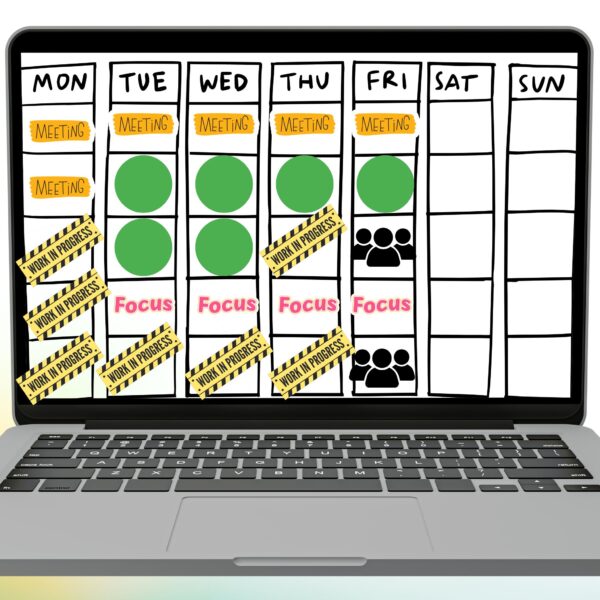
Imagine all the weekly hours recouped by PMs after automating feedback analysis. The difference is real.
Automating the Grind: Where AI Makes Life Easier
Let’s be honest. Nobody brags about the hours spent tagging bug reports or summarizing customer interviews. That’s where AI product management tools shine—slashing the time you spend on busywork, so you can focus on creative, high-value work.
The AI Toolkit for Modern Product Managers
| Tool Name & Example Use Cases | Category | Key Feature / Use Case |
|---|---|---|
| ChatGPT, Claude, Gemini, Perplexity, Notion AI | Foundational Assistants | Draft PRDs, brainstorm, summarize info, speed up ideation for strategy |
| Productboard AI, Zeda.io, Chisel, ProdPad CoPilot | Product Management Platforms | Roadmapping, feedback clustering, prioritization |
| ClickUp, Notion AI, Otter.AI, Gong | Workflow Automation | Meeting summaries, project planning, feedback analytics |
| Figma (GenAI), Canva, v0 | Design & Prototyping | Rapid wireframing, prototyping, mockup and visual ideation |
| Aurora Slides | Presentation Automation | Instantly transforms research notes and bullet points into a polished, on-brand slide deck for PMs and teams. Enables fast iteration and storytelling for internal and executive presentations. |
| Spinach AI, Motion, Forecast.app | Project Management Automation | Automates scheduling, status reports, resource allocation, risk management, and streamlines meetings |
These tools collectively automate everything from note-taking and prioritization to design, team alignment, and reporting. By leveraging them, product managers can focus on the strategy, creativity, and stakeholder relationships that truly move the needle.
When AI Becomes Your Secret Weapon
Once you’ve kicked the repetitive stuff to the curb, AI can help you play at a higher level. Think: Netflix-style personalization, Amazon-level market predictions, or even launching features nobody else has dreamt up yet.
What’s wild is that AI doesn’t just help you keep up; it helps you leap ahead. The best PMs use AI to run “what-if” scenarios, simulate user flows, and even generate new feature ideas—sometimes before competitors have spotted the trend.
One CPO told me,
“AI didn’t just save us time—it united us more as a team. And trust grew stronger when all team work data was visually available for everyone else involved in the same project”
Here’s the reality: while you’re still debating whether to bring AI into your workflow, your competitors—especially those bigger, better-funded, or simply more forward-thinking—are already putting these tools to work. The companies you look up to (or compete against) aren’t waiting for permission; they’re using AI to uncover insights, refine their strategies, and launch smarter, faster, and with more confidence. If they’re already automating research, optimizing roadmaps, and predicting market shifts, why not you?
Waiting on the sidelines is a sure way to fall behind. Adapting now isn’t just about keeping pace—it’s about making sure your team and your product don’t get left in the dust.

The Modern PM Skillset: It’s About Curiosity and Uncertainty
Here’s the myth: “You have to be a data scientist to succeed as a PM now.” Not true. What you do need? An appetite for learning, comfort with data, and the humility to ask, “Wait, does this AI recommendation actually make sense?”
Another skillset required is managing uncertainty. “Will your team adapt to this new way of doing things?”, “Is this AI tool worth the initial investment? How will reporting change after adoption?”, “How will the team handle training and errors that might happen?”, “Who will be responsible for the losses?”.
As a PM trying to help everyone in your team adopt AI, you have to take these questions into account for the entirety of the process and be okay with it.
Aurora Slides—Your Story, Only Smarter
Let’s talk about a moment every PM dreads: you’ve just finished a week of discovery interviews, your brain is fried, and the leadership team wants a slick deck by tomorrow morning. Enter Aurora Slides the latest AI Pitch Deck.
Drop in your messy notes and raw ideas. The AI organizes, polishes, and transforms them into a beautiful, branded presentation—instantly. You can even “chat” with the AI to refine points, rearrange sections, or add visuals… all without opening PowerPoint.
Scenario:
I once needed to pitch a new onboarding flow. Instead of spending three hours wrangling slides, I dumped my sketches and notes into Aurora Slides. The result? A clear, compelling deck—and time left over to rehearse my story.
Practical Tools and Insights (Video Recap)
I recommend you watch the YouTube video “AI for Product Managers: Practical Tools and Insights and felt like someone finally pulled back the curtain on real-world PM/A.I. mashups. The Docker PM leading the session didn’t sugarcoat it: AI isn’t taking your job, but it is changing it.
Some takeaways:
- Most PMs use AI (hello, ChatGPT) for research summaries, ticket analysis, and quick drafts—not deep strategy (yet).
- Specialized tools (like Arrow for user research) are on the rise. The future? Juggling a bunch of AI “assistants,” each with a specialty.
- The biggest win? Fast iteration and “fail faster” learning.
- The best PMs will blend human skills (empathy, vision) with AI “superpowers.” Nobody wants a robot PM.
Their advice? Use AI to boost your unique value, not to hide behind it.
Pitfalls and Ethical Imperatives
Here’s where things get real: AI can do a lot, but it isn’t always right. Ever let GPS send you down a dead-end street? Same idea. Automation bias or discrimination, privacy issues, and black-box recommendations are real risks.
Analogy:
AI is your GPS. It’ll get you there faster, but you still have to drive, question, and—sometimes—pull over and check the map.
Best practice: Always check, question, and (when in doubt) add a human layer before making big calls.
Comparing the New and Old
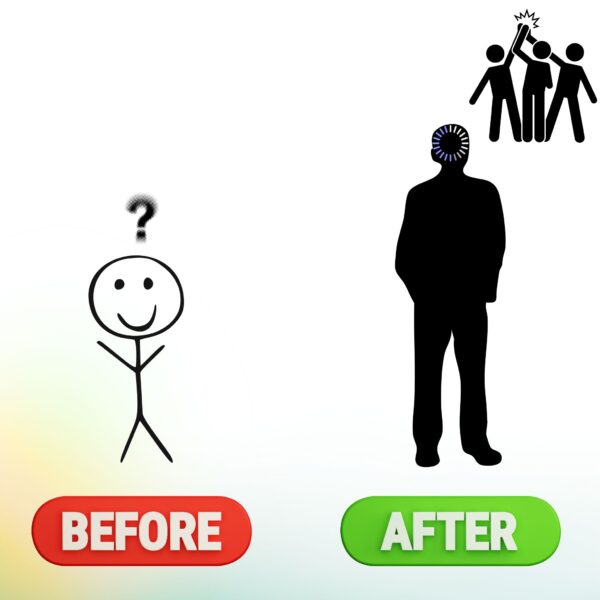
The transformation from traditional to AI-enabled product management isn’t just about new tools—it’s a fundamental shift in how PMs think, prioritize, and deliver value. If you’re wondering what this evolution really looks like in practice, here’s a side-by-side snapshot that highlights the key differences between the old way and the AI-powered approach.
Let’s make it concrete:
| Traditional Product Manager | AI-Driven Product Manager |
|---|---|
| Relies on manual data and gut instinct to understand customer | Uses AI tools for rapid Customer Feedback Analysis and insights |
| Spends hours on routine docs and creating tickets | Automated Ticket Creation, specs, notes, and reporting |
| Siloed, single-discipline | Collaborates across design, engineering, data science |
| Tactical, reactive | Strategic, vision-driven, user-centric |
How to Make AI Work for You
Adopting AI in product management isn’t about flipping a switch—it’s more like evolving from a manual bicycle to an electric one. You’re still steering, but the effort goes a whole lot further. Here’s how to make the transition not only smooth, but energizing:

1. Map Your Routine—Spot the Drains
Start by tracking where your time actually goes for a week. Are you buried in meeting notes? Spending hours sorting user feedback? These are prime candidates for automation.
Scenario: A PM at a SaaS startup realized she was spending nearly 10 hours a month just transcribing interviews. By piloting an AI-driven transcription tool, she reclaimed that time for actual synthesis and user outreach.
2. Pilot with Purpose—Don’t Chase Shiny Objects
It’s tempting to try every AI tool out there, but resist the urge. Instead, run a mini-experiment: pick one pain point, try one tool, and measure the results. Did sprint planning get faster? Did customer insights improve? If not, iterate or try something new.
3. Build Data Literacy—No Coding Required
You don’t need to be a machine learning engineer, but you do need to get comfortable with data. That means understanding how AI tools draw insights, knowing what good data looks like, and asking smart questions when outputs don’t make sense. Most AI suggestions or decisions can be traced back to the data that informed them.
4. Create Feedback Loops—AI Learns with You
The best PMs set up regular check-ins: Is the AI surfacing useful themes? Are there blind spots or biases creeping in? Treat your AI toolkit like a junior team member—you wouldn’t leave them unsupervised on a big launch.
5. Stay Human—AI Is Your Co-Pilot, Not the Captain
AI can flag patterns, draft stories, and crunch numbers, but it can’t replace your intuition, empathy, or ability to rally a team. Use AI to amplify your strengths, not sideline your judgment.
Analogy: Imagine you’re baking bread with a stand mixer. The mixer does the heavy kneading, but you decide on the recipe, add the ingredients, and taste the dough. AI is your mixer—helpful, but not the baker.
–> And if for a second you thought AI could replace your PM role at any company, that is not going to happen any time soon. Fortunately, this is one of the roles most needed for projects, interacting with stakeholders or clients, and reporting that companies cannot replace with technology or LLMs. AI can automate and amplify, but it can’t replace your empathy, creativity, or strategy. Here’s a Reddit comment that says it best:
Comment
byu/Aha_io from discussion
inProductManagement
Takeaway:
The PMs who thrive with AI aren’t the ones who automate everything or fear that their role will be taken away—they’re the ones who blend automation with curiosity, reflection, and a willingness to experiment (and sometimes fail) in pursuit of better products.
Conclusion: Human + AI = The Future of PM
Let’s zoom out. AI is here to stay, but product management’s soul remains stubbornly, wonderfully human. The best product managers treat AI like a super-smart teammate—one who’s relentless with data, fast with drafts, and always ready to crunch another scenario. But here’s the secret: they never let AI do all the thinking for them. Your team will be counting on you to get it right, so you need to stay on top of adoption across the board.
If you’re willing to lean in, experiment, and keep your curiosity sharp, AI won’t just make you faster—it’ll make you bolder, more creative, and more in tune with what your users really need. The future isn’t about choosing between human and machine. It’s about building partnerships—where your empathy, vision, and judgment combine with AI’s power to deliver products that genuinely resonate.
Your next breakthrough may come from a well-tuned algorithm, a spark of human intuition, or—most likely—a collaboration between both. So keep your hands on the wheel and let AI supercharge the journey.
Frequently Asked Questions (FAQs)
What are the top ai tools for product managers in 2025?
A: Check out the table above—start with foundational assistants, then explore PM platforms and workflow tools. The most used one is ClickUp that this year fully implement AI all over its functionalities.
How can Aurora Slides make a PM’s workflow faster and more effective?
A: Aurora Slides instantly turns PM notes, bullet points, or research findings into a polished, on-brand slide deck. This lets you spend less time formatting and more time refining your message, sharing insights, and iterating with your team. No more late-night deck-building marathons—just clear, compelling presentations at lightning speed. Learn more
What are the biggest challenges when adopting AI tools for product management?
A: Data quality, upskilling the team, privacy, and avoiding blind trust in automation. Start small, keep learning, and use AI as a partner.
How do I upskill my team for AI-powered product management?
A: Invest in data literacy, AI basics, ethics—and give people room to experiment, fail, and share what they learn.
Ready to make AI your co-pilot? The future of product management is yours to shape—experiment with Aurora’s features today.