
If you were wondering whether or not AI could generate logos and searched some examples of what it’s producing, you’ve seen the hype. They are good! AI tools promise instant, budget-friendly branding magic: type in a business name, click a few buttons, and voilà—your new logo appears. But before you trust your brand to an algorithm, consider this: neuroscientists have shown that the moment someone sees a logo, their brain lights up in a cascade of reactions—processing color, shape, meaning, and even emotion, all in less than half a second. A logo isn’t just a graphic; it’s a shortcut to memories, feelings, and even trust.
As the research explains, your brain doesn’t just “see” a logo. It connects that symbol to every experience you’ve ever had with the brand—good or bad. And here’s the kicker: MRI studies suggest we process brands and their logos in the very same brain areas where we forge bonds of friendship. In other words, a logo is the handshake, the wink, the inside joke between your company and your customers.

In this deep dive, we’ll cut through the noise. You’ll see why logos are about much more than colors and icons—and why getting it wrong is costlier than you think.
What Makes a Logo “Truly Stand Out”?
Let’s start with a truth bomb: a great logo is part art, part science, and all strategy. It’s not just a pretty face for your business. A logo is a stake in the ground. It’s how customers remember you, how competitors fear you, and it’s the piece of your brand that might outlive your current product or CEO.
The Seven Pillars of Outstanding Logo Design
What separates the forgettable from the iconic? Here’s the industry consensus:
| Pillar | What It Means for Your Brand |
|---|---|
| Simplicity | A logo should be so clean and clear that you can doodle it from memory. Think Nike’s swoosh or Apple’s apple. |
| Distinctiveness | If your logo could appear on a rival’s website, it’s not distinctive enough. The goal is instant—“Hey, that’s us!” |
| Versatility | Your logo needs to work on a billboard, a pen, a phone app, and a black-and-white invoice. |
| Relevance | Does the look fit your industry? Tech and finance lean blue for trust; food brands love red for appetite. |
| Memorability | If someone sees it once and can recall it later, you’re winning. |
| Timelessness | Flashy trends fade. The best logos age like fine wine. |
| Consistency | Your logo shouldn’t morph every time you use it. A strong mark is the anchor of brand trust. |
Want a masterclass in this? Tubik Studio breaks down why these pillars matter at every stage, from that first sketch to your company’s IPO.
How Professional Designers Build Distinction
Here’s the thing: great logos don’t happen by accident. Human designers don’t just “make things pretty”—they dig deep. AI could do the same research but it does not have the same brain as us to be able to feel a neurological reactions towards an specific color, a combination of colors, or a familiar shape. So the human eye and opinion are imperative for the selection process of all elements.
The Critical Human Workflow
- Discovery: It’s like therapy for your brand. Designers ask questions you never thought about: “What do you stand for?” “What do your customers care about?” The more data a designer can get from a client, the better.
“If you understand why your customer wants to see particular colors, shapes or transitions, it will be easier for you (if necessary) to justify other methods of realization of these ideas which would give the result desired by the customer.” – Tubik Studio
- Research: The pros study your competitors, your industry, your audience—so your logo fits in and stands out. You could use tools like Aurora’s free version, to build a knowledge doc where you paste all your research or unstructured data, and it can later provide you with a full report of how your competitors are currently positioned. This will help you during the design process, and when having to dicern which competitors you want to not be related to.
- Brainstorming & Sketching: This is where the magic happens—ideas flow, metaphors emerge, and jokes turn into genius.
- Delivery & Style Guide: It’s not just a file—it’s a system, rules, and rationale. A logo is a living asset.
Why Research Matters
Ever notice how banks and hospitals mostly use blue? That’s not a coincidence—it’s color psychology at work.
What we know so far:
| Industry | Brand Value | Research Focus | Example Constraint |
|---|---|---|---|
| Finance/Healthcare | Trust | Test for safety perceptions | Blue palettes, formal fonts |
| Tech/SaaS | Innovation | Multi-platform, future-proof | Simple forms, app icon ready |
| Nonprofit | Empathy | Does logo inspire action? | Authentic, mission-driven visuals |
| Food/Retail | Appetite | Color triggers, shelf appeal | Red/yellow, packaging consistency |
How AI Logo Generators Work
Let’s get practical. If you Google “ai generate logos,” you’ll see Looka, Brandmark, Tailor Brands, LogoAI, and a dozen more promising to make you the next Apple overnight. The way these work is usually a combination of technologies. SVG explains it better:
“Most AI logo generators employ a combination of technologies: neural networks trained on thousands of professional logos, natural language processing to understand your business descriptions, generative adversarial networks (GANs) to create novel designs, and computer vision algorithms to ensure visual harmony. The best platforms also incorporate vector graphics generation capabilities to ensure your logo remains crisp at any size—essential for modern multi-platform branding.”

The “Template Ceiling”
Plug in your name and a color, and you’ll get a bunch of options. But don’t mistake quantity for quality.
Here’s the reality:
- AI tools remix a giant library of templates.
- You can tweak fonts and icons, but if you want something truly original, you’ll hit a wall.
- There’s a learning curve for each platform you test. The more you use it and learn about their features, the better your outputs.
- You will feel the limitations in your creativity. Always working around “what’s available” for you to use.
- And the complete opposite could happen as well: you could end up feeling overwhelmed by all the options you have.
Table: AI Logo Generator Showdown
| Platform | Why Use It | Where It Stalls | Best For |
|---|---|---|---|
| Looka | Fast, full kits | Feels templated | Social media, quick start (5 minutes to generate logo) |
| Brandmark | Unlimited edits | Mockups limited | Quick iterations, really goo at staying on-brand |
| Tailor Brands | Custom(ish) | Expensive, locked in | Branding ecosystem, lots of logos to chose from |
| LogoMakr | High control | Steep learning curve | DIY experts, hands-on control |
Many brands outgrow their AI logo. What was cheap and cheerful at launch becomes a liability when you scale—and you end up paying a human to “fix” it anyway. Keylay Design discusses how some companies have come to them because they don’t like their curent AI logo, just to completely change it by hiring them.
Legal Landmines
The legal battle of AI vs Originality is not going anywhere and it does not exclude AI-genererated logos. Here’s where a lot of businesses get burned. If you would like to avoid all of this, you should contact a design agency like 500 Desings; with years of experience in generating original logos from scratch. Certain aspects of your brand just aren’t worth the cost of experimentation.
The Originality Problem
AI logo generators can only combine what already exists. That means your “new” logo might look suspiciously like someone else’s—maybe even your competitor’s.
But there’s a deeper risk: because AI models are trained on vast, often uncurated datasets, your logo could unintentionally contain elements derived from copyrighted or confidential material. If an AI tool generates content that directly or closely resembles protected works, your business could face infringement lawsuits—even if you were unaware of the source.
Risk: Outputs may not be original or “safe to use,” and copyright infringement can occur without intent.
Copyright and Human Authorship
No human touch? No copyright. The U.S. Copyright Office is clear: you need “substantial human authorship” for protection. And as ADLI Law Group further explains, under current U.S. law, only works with meaningful human input are eligible for copyright protection. If your business relies solely on AI-generated logos or design assets, you may not be able to claim legal ownership or enforce your rights if someone copies them.
Solution: Ensure a human meaningfully edits or contributes to the final logo and document those changes—register the final work if possible.
Trademark Risk: “Template Twins”
Imagine launching your cafe with an AI logo—only to find a shop two towns over with the same mark. That’s a lawsuit waiting to happen.
But even more, trademarks require distinctiveness and originality. If your AI-generated logo isn’t unique enough or too closely resembles an existing logo or mark, your trademark application could be denied or challenged.
Risk: You may be left exposed to infringement and copycats, with no legal recourse.
Solution: Work with a trademark attorney to conduct clearance searches and revise AI-generated branding for legal viability. Avoid generic or templated designs.
Ownership & Terms of Service Traps
Many AI platforms include broad licensing clauses in their terms of service, which may grant the provider or others rights to your generated content.
Risk: Even if you design a logo using an AI platform, you might not have exclusive rights—or even ownership—undermining your ability to trademark or protect that logo.
Solution: Always read platform terms carefully. Opt for tools with clear IP ownership terms or enterprise agreements that protect your rights.
Trade Secret & Confidentiality Risks
When you input sensitive business information into public AI tools, that information could be stored, used for training, or accessed by third parties.
Risk: Confidential strategies or proprietary information could be exposed, potentially losing trade secret protection under the law.
Solution: Limit AI use for sensitive matters and adopt internal policies restricting what can be shared with generative platforms.
Checklist to Stay Out of Trouble:
- Always have a designer materially change your AI logo.
- Search for similar marks before you go public.
- Get full IP transfer, or you might not actually “own” your logo.
- Review platform terms before generating business-critical content.
- Consult legal counsel for trademark clearance and registration guidance.
The Human-AI Hybrid Model
Here’s the sweet spot: use AI for speed, but let humans bring the soul and 90% of the creative work. For example if you feel drained and like you ran out of original ideas you can use an AI generator for logos to get a fresh perspective or angle on a design.
The New Workflow
- AI handles the grunt work: quick iterations, idea starters, fast tests.
- Designers bring the “wow”—they inject strategy, originality, instinct, and legal defensibility.
- AI can help process feedback and generate variations, but…
- Only human designers can truly absorb and interpret what clients want out of their logo, using their experience, emotional intelligence, and creative instinct.
- AI helps create a pitch deck to present the final logo and its usage guide, but…
- Designers still carry the presentation, bringing nuance, storytelling, and client connection to the table.
Table: AI vs. Human—Who Does What Best?
|
What Matters
|
Human Designer
|
AI Generator
|
|---|---|---|
|
Concept
|
Deep, brand-driven, motivated by business goals and culture
|
Literal, surface-level
|
|
Originality
|
Unique, defendable, custom-crafted
|
Generic, risky, often template-based
|
|
Speed
|
Slower, thoughtful, iterative
|
Instant, but shallow
|
|
IP
|
Own it 100% (clear copyright/trademark)
|
Murky ownership, legal gray area
|
|
Customization
|
Infinite, tailored to feedback and context
|
Platform-limited, parameter-based
|
|
Client Understanding
|
Absorbs and interprets client and stakeholder needs with instinct, empathy, and creative translation
|
Cannot truly “understand” or intuit feedback—relies on explicit prompts and instructions
|
AI is a great creative spark and productivity booster, but only a human designer can read between the lines, sense what a client really means during feedback, and channel business strategy and emotion into a mark that’s both original and enduring.
If you want a logo that’s not just fast, but timeless—and a process that leaves clients feeling truly heard—there’s no substitute for the human touch.
Presenting Your Logos with Authority and Clarity
You’ve got a logo (or three). How do you pitch it so clients and stakeholders say “yes!”?
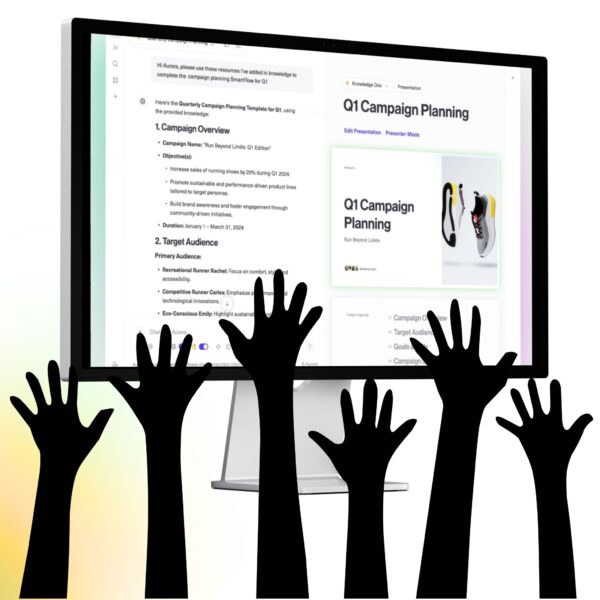
Aurora Slides is your storytelling secret weapon:
- Turn chaos into clarity: Instantly transform research, inspiration, and logo drafts into slick, persuasive presentations.
- Adaptive layouts: No design degree required—Aurora Slides arranges your concepts for max visual punch.
- Show your process: Walk clients through your creative journey, from competitor research to final reveal.
- Collaborate in real time: Gather feedback, annotate your rationale, and make every presentation interactive.
Whether you’re showcasing AI-generated options or your own hand-crafted mark, Aurora Slides doesn’t just sell the logo—it sells your story.
Insights from “10 Mind-Blowing Logo Design Tips”
Logo legend Will Patterson drops essential wisdom in his 2024 video:
-
- The Galileo Effect: Use colorways to make your logo feel bigger or more “premium.”
- Boning Effect: Subtle curves outshine stiff, perfect lines—imperfection feels human.
- The “Noun” Method: Anchor ideas in real objects for instant uniqueness.
- Clearspace and Kerning: Space isn’t wasted—it’s strategic.
- Messy Sketching: The best ideas come fast and rough; polish later.
- Mind Mapping: Map out everything your brand stands for—let connections surprise you.
- Originality Check: Always Google reverse-search your drafts.
- Love the Process: Real logos show their scars; that’s what makes them memorable.
Watch the full video here:
Whether you’re using an “ai business logo generator” or starting from scratch, these are your north stars.
Logos Are Like Deep, Strategic Art
Here’s a gut-check: AI logo generators are like fast food—quick, easy, but not exactly gourmet. If you want iconic, you need to think like a chef, not a short-order cook.
Picture this: Apple’s logo is just an apple, right? But it’s the years of careful tweaks, public feedback, and strategic research that made it timeless. Mess up a redesign, and the internet will never let you forget it—some brands have lost millions because a new logo flopped so hard they had to backtrack.
So, use AI for quick drafts and inspiration, but never skip the deep work: know your competitors, your industry, and—above all—your customers.
Reddit Opinions: What Real Designers Say
Let’s see what the real world thinks about AI generated logos. The design crowd on Reddit doesn’t pull punches:
Timelessness is key. If a logo only works for a year, it’s failed.
Comment
byu/AbeLincolnMixtape from discussion
ingraphic_design
AI logos are fine, but rarely represent the current times if not carefully guided into it.
Comment
byu/woodss from discussion
inartificial
Do your research. Too many logos look like they were made from the same five templates.
Comment
byu/woodss from discussion
inartificial
Extend your research as far as you can. You should also include: models, reviews, examples, and differences in their output:
Comment
byu/woodss from discussion
inartificial
Key Takeaway
In the age of instant AI logo generators, creating a logo has never been easier—but true brand impact demands more than quick clicks. AI can spark ideas and speed up drafts, but only a human designer can craft a mark that feels authentic, resonates emotionally, and stands the test of time.
If you want a logo that’s memorable, defensible, and uniquely yours, use AI for inspiration—but trust the final vision to real human creativity and insight. That’s how brands go from forgettable to unforgettable.
Frequently Asked Questions (FAQs)
Are AI-generated logos legally protected?
A: Not always. In the U.S., logos must involve substantial human authorship to be eligible for copyright. If your logo is generated entirely by AI, you may not be able to claim copyright protection.. Trademark protection may be possible, but generic or template-based AI logos carry a high risk of similarity to others, which can lead to disputes .
How do I make sure my AI-generated logo is distinctive?
A: Start by customizing beyond the default options—adjust icons, fonts, and layouts. Then, do a reverse image search to check for similar logos online. For the highest level of uniqueness, collaborate with a human designer who can inject strategy, research, and creative nuance. You should also consider having handy a competitor analysis pitch deck of your industry to make sure you’re not stepping on any toes.
How can Aurora Slides help me present my logo designs to clients or stakeholders?
A: Aurora Slides is an AI deck builder that lets you turn research, sketches, and logo drafts into stunning, persuasive presentations in minutes. Its adaptive layouts and design-driven templates help you showcase your creative process, rationale, and final brand marks with clarity and professionalism—making your logo story as compelling as the logo itself.
Can I use Aurora Slides to compare different AI-generated logos or show my design evolution?
A: Absolutely. Aurora Slides makes it easy to create side-by-side comparisons of multiple AI-generated logos, document your design iterations, and visually communicate why your chosen logo stands out. This is ideal for pitching options to clients, gathering feedback, or recording your creative journey for future reference.
How important is having the right logo in my overall business strategy?
A: The correct logo is far more than just a graphic—it’s a strategic asset that anchors your brand identity, builds trust, and shapes first impressions. According to neuroscience research, a logo acts as a shortcut in the brain, instantly triggering memories, emotions, and associations with your brand.
A distinctive, well-crafted logo can help differentiate you from competitors, increase customer loyalty, and support your growth at every stage. On the flip side, a generic or poorly chosen logo can undermine credibility and even cost you business opportunities. Before launching your business idea or jumping into crafting a logo for a client make sure to first create a winning positioning strategy that can later align with your visual identity.